
When designing a space, the choice of materials is very important. Many designers like to use white ash veneer because it looks natural and elegant.
White ash veneer has a light, creamy color and a clear grain. The pattern is simple but beautiful, which makes the space look bright and clean.
At the same time, ash wood is strong, so it works well for furniture, cabinets, and wall panels.
Because of its natural look and good durability, white ash veneer has become a popular choice for many architects and interior designers.
1. What is white ash veneer?
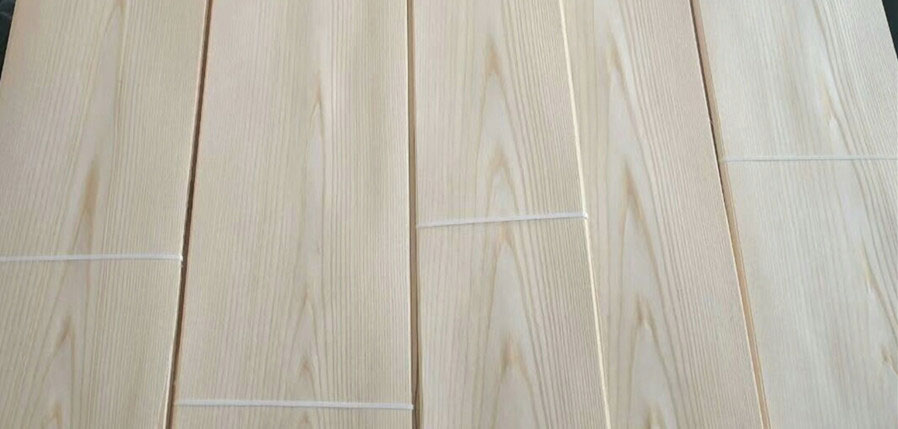
If you have ever looked at a well-made piece of furniture or a nice cabinet, you may have seen white ash veneer. It is quite popular in woodworking.
White ash veneer has a light, creamy color and a straight, natural grain.
The look is simple but elegant, so it is often used for furniture, cabinets, and wall panels.
Most white ash comes from the United States and Europe.
The veneer is sliced thin from the wood, which keeps the natural look but uses less material than solid wood.
The density is around 0.60–0.75 g/cm³, so it is strong and durable, but still easier to process than many heavier hardwoods.
That is why many furniture makers like to use it.
Using veneer also helps save wood, so it is a more environmentally friendly choice.
2. Types of ash wood veneer
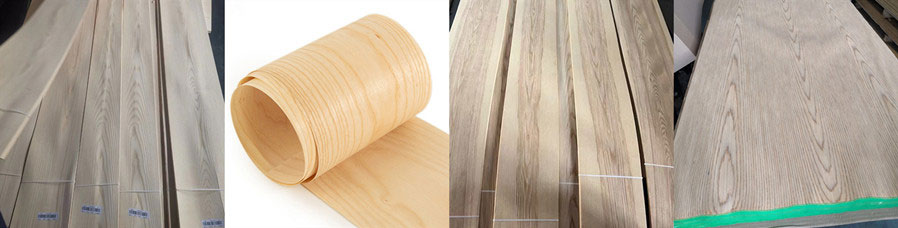
2.1 Natural ash wood veneer
Regarding the wood veneer grains, there are approximately five different grains of natural ash veneer.
2.1.1 Crown cut (Flat cut) white ash veneer
Crown cut white ash veneer shows the natural cathedral grain of the wood.
The pattern is wide and clear, which makes the surface look lively and natural.
With its light color and smooth texture, it brings a warm and clean feeling to furniture and interiors.
Crown cut white ash veneer is often used for cabinets, furniture, and wall panels where a natural wood look is wanted.
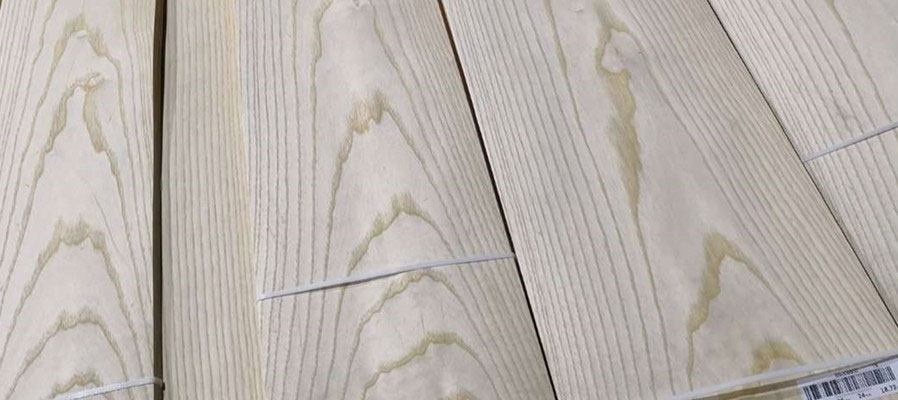
2.1.2 Quarter cut ( rift cut ) ash veneer
Quarter-cut ash veneer has a straight and clean grain.
The lines look neat and even, which gives a simple and modern feeling.
The color is light and natural, and the surface looks smooth and calm. It is often used for furniture, cabinets, and wall panels where a clean and elegant wood look is needed.
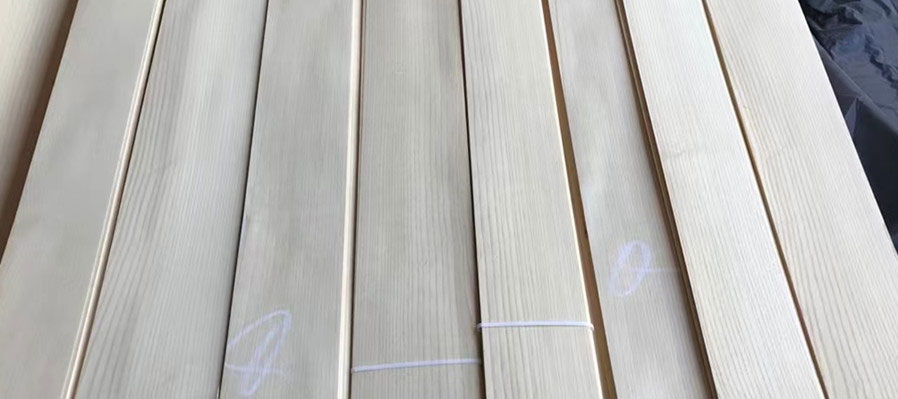
2.1.3 Rotary cut white ash veneer
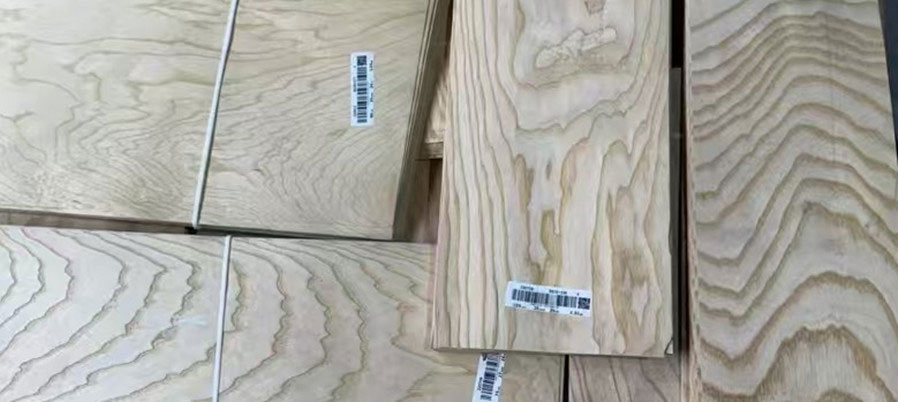
Rotary-cut American ash veneer is made by peeling the ash log into a continuous sheet.
This cutting method creates wide veneer sheets with a natural and varied grain.
It is often used for plywood, furniture, and large panels where large sizes of veneer are needed.
2.1.4 Rough sawn cut white ash veneer
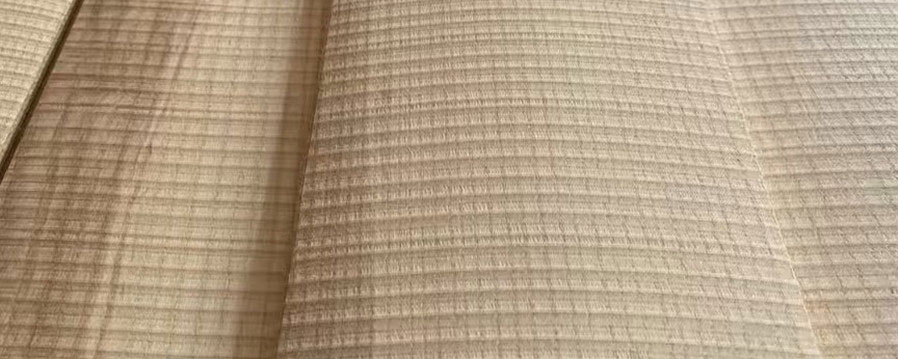
Rough-sawn cut white ash veneer has a natural, textured surface.
It keeps the rough saw marks, so the wood looks more original and rustic.
The grain of ash is still clear, but the surface feels more natural and full of character.
It is often used for furniture, wall panels, or interiors where a warm and natural wood feeling is wanted.
2.1.5 Tamo ash veneer
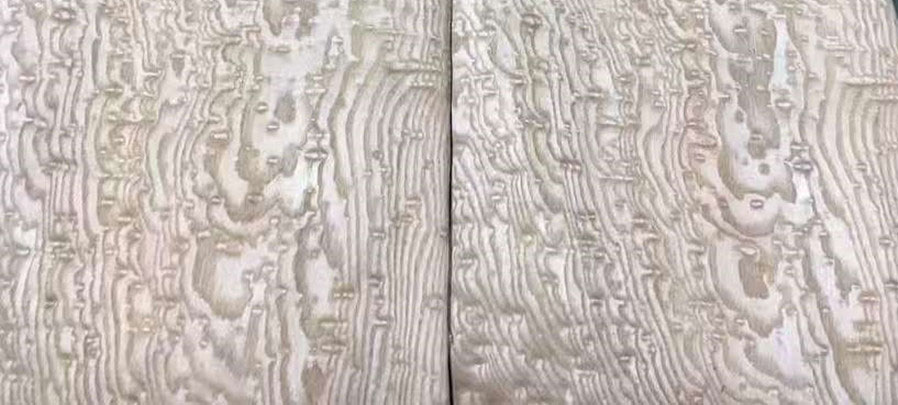
The core material of Tamo ash veneer is light to medium brown, with wide white edges that appear light brown.
There is no obvious boundary between the core and the edges.
When the wood is rotary cut, it produces a texture similar to peanut shells, giving the surface distinct peanut-shaped shadows.
The grain is straight, sometimes irregular or interlocking.
The texture and shadows of Tamo ash are unique, and when it is free of shadows, it resembles North American white ash, and can also be compared to Japanese white ash.
Regarding the wood veneer color, there are 2 main colors of natural ash veneer.
2.1.6 Olive ash veneer
Olive ash veneer shows two natural tones in one sheet.
Usually, it comes from the difference between heartwood and sapwood. One part looks a little darker, the other part lighter.
Because of this color contrast, the olive ash veneer looks more lively and natural.
It is often used for furniture, cabinets, or decorative panels where people want a more special wood look.
2.1.7 Dyed ash veneer
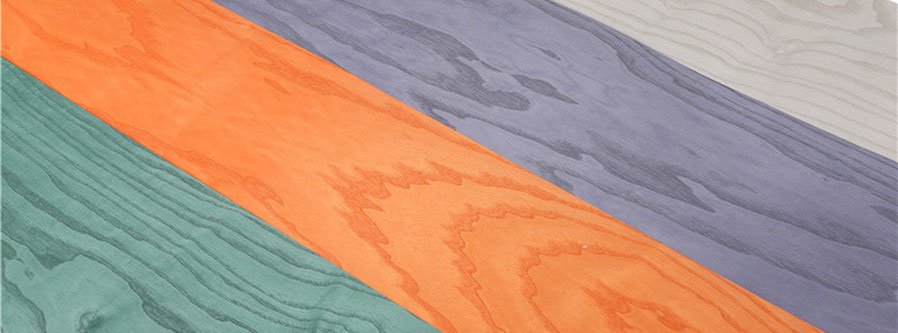
Dyed ash veneer combines vibrant, customizable colors with the wood’s natural grain, adding a bold, modern touch to any design.
Regarding the jointed or spliced wood veneers, there are approximately 2 different types of natural ash wood veneer.
2.1.8 Finger joint ash veneer rolls for edgebanding and profile wrapping
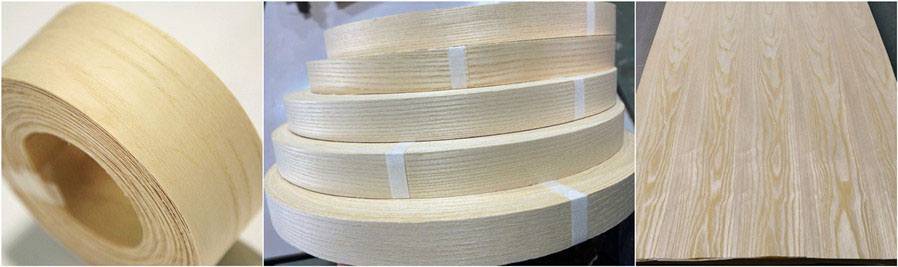
American white ash veneer rolls are thin sheets of real ash wood supplied in roll form.
They are flexible and easy to apply, especially for long panels or curved surfaces.
Because they come in rolls, they are convenient for furniture, cabinets, wall panels, and interior finishing.
Finger-jointed white ash veneer is made by joining small veneer pieces together.
The joints are tight and smooth, so the veneer looks continuous. It is strong, stable, and saves material.
It is often used for edge banding and profile wrapping. Edge banding is usually for flat edges, about 15–60 mm wide. Profile wrapping is used for wider pieces or curved shapes, normally about 60–300 mm wide.
2.1.9 Matched ash veneer layon
Matched white ash veneer layons offer consistent grain patterns for a seamless, high-end finish, ideal for elegant furniture and interiors.
Types of matched white ash veneer include Book matched, Slip matched, Mismatched (Random matched), and Herringbone matched.
2.2 Reconstituted white ash veneer
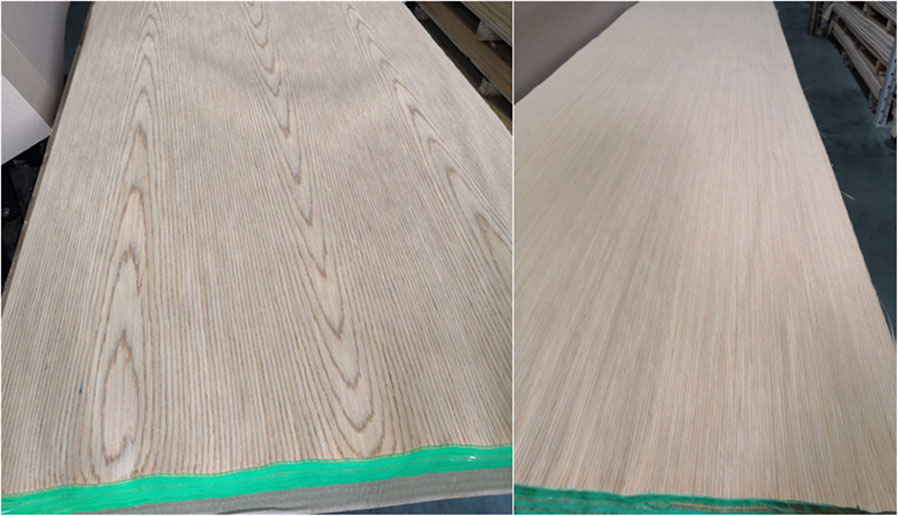
Reconstituted white ash veneer offers the perfect blend of sustainability and beauty, making it an eco-friendly alternative to traditional ash wood veneers.
Made from fast-growing wood, it replicates the elegant look of Fraxinus americana (white ash), with a uniform, consistent appearance thanks to its innovative production process.
Reconstituted veneer retains the natural charm of white ash while minimizing the environmental impact.
With a density ranging from 0.6 to 0.75 g/cm³, it maintains the same strength and aesthetic appeal as its natural counterpart.
3. Understanding different types of ash veneer: American, European, and Chinese ash
Although they are all named as “ash,” American ash, European ash, and Chinese ash are a bit different.
They have different grains, colors, and prices.
Some are lighter, some have stronger grain, and the costs can also vary.
Because of these differences, they are used in different projects, such as furniture, flooring, cabinets, and interior panels.
Knowing these differences can help designers and woodworkers choose the right ash veneer for their project.
3.1 American ash veneer
American ash, also called white ash, has a light color and straight grain.
The texture is smooth, and the wood is not too hard, so it is easy to process and work with.
The price is reasonable, so it is a practical hardwood for many projects.
American ash veneer is often used for modern furniture, cabinets, and flooring, especially when a clean and bright wood look is wanted.
3.2 European ash
European ash veneer has a coarse texture and a clear, regular grain.
Sometimes you can see small waves or curls in the wood, giving it a natural look.
Its strength and hardness are close to American ash, and the price is similar to white oak, so it is an affordable hardwood.
European ash veneer is often used for furniture, wall panels, and flooring where a natural, rustic wood look is wanted, without spending too much.
3.3 Chinese ash veneer
Chinese ash has gray-brown heartwood with some darker streaks.
The sapwood is light brown or beige, and the difference between heartwood and sapwood is not very clear.
The texture is coarse like oak, and the grain is mostly straight, sometimes with small waves or curls.
Chinese ash is strong, practical, and affordable.
Even though they are all ash, American ash, European ash, and Chinese ash are quite different.
American ash is light and bright, good for modern furniture and interiors. European ash has a natural, rustic look and is affordable. Chinese ash is strong and practical, often used for floors and structural work.
Choosing the right ash veneer helps make your project look better and last longer.
4. Application of ash wood veneer
White ash veneer is often pressed on substrates such as plywood and MDF and then used in furniture making.
4.1 Ash wood tables
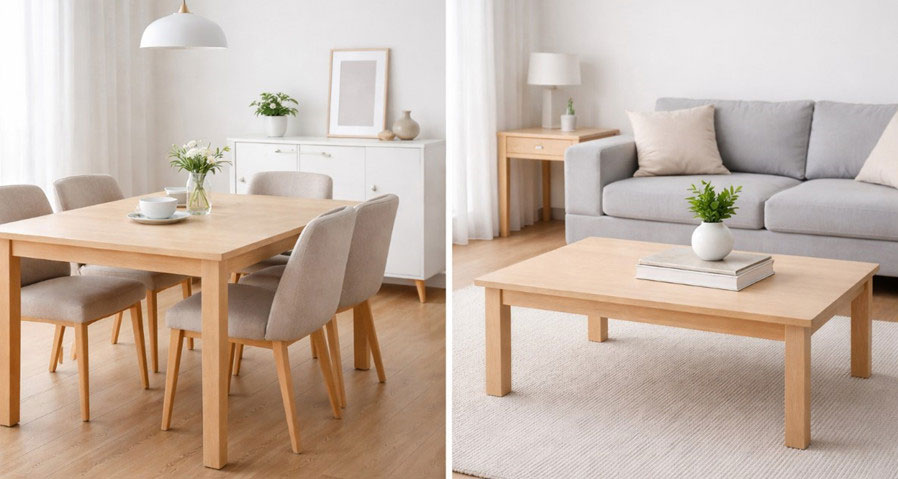
White ash veneer is a good choice for tabletops.
It has a light color and straight, even grain.
The surface looks clean and modern, and it is strong enough for daily use.
White ash works well for dining tables, coffee tables, or office desks, giving a bright and simple look that fits modern and minimalist spaces.
4.2 Ash veneered wood door
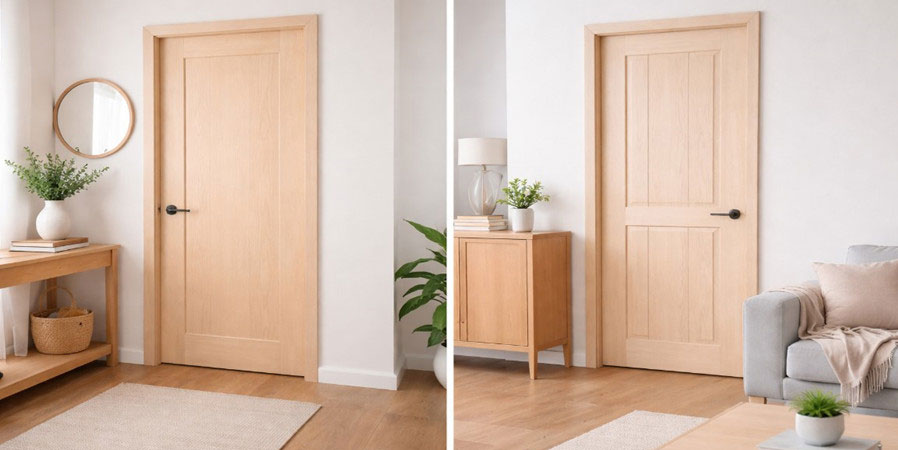
White ash veneer works well on doors.
It has a smooth texture and light, even color.
It fits well with other wood or painted surfaces and gives a simple, elegant look.
White ash veneer can also be used for different panel designs while keeping the door looking high quality.
4.3 Ash veneered cabinet
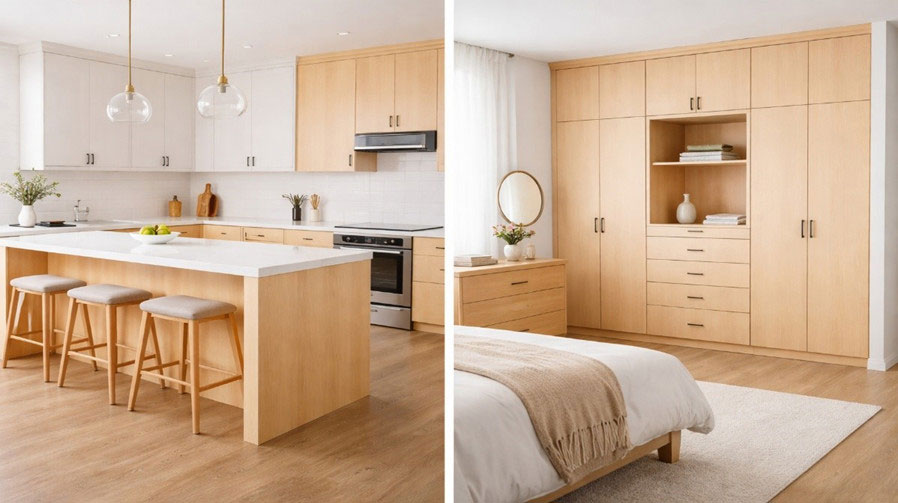
Ash wood veneer is often used for kitchen and wardrobe cabinets.
It is strong and can handle daily use.
The light color makes rooms feel bright and open, which is good for small spaces.
White ash gives a clean, modern look and works well in contemporary cabinet designs.
4.4 Ash veneer wrapped moulding profiles
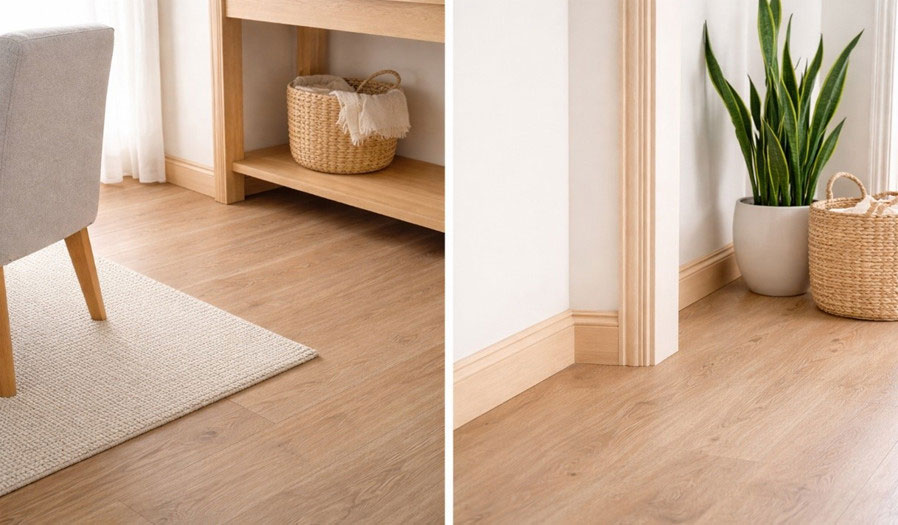
Ash veneer can also be applied to moulding profiles, baseboards, and trim, adding subtle elegance and continuity to a room’s design.
Its straight grain and light color make it versatile for matching with furniture, cabinetry, and flooring, enhancing the overall cohesiveness of interior spaces.
5. White ash veneer in China
5.1 Import
China is the main importer of U.S. White ash veneer.
Most of it comes directly from the U.S., with smaller amounts from Canada, Germany, and other countries.
In 2025, Vietnam also became an important transit point for North American White ash products entering China.
From January to July 2025, the volume of White ash passing through Vietnam increased by 45.4% compared to the previous year.
Most imported veneer is 0.45–0.6 mm thick, with straight or crown grain.
It is mainly used for furniture and decorative panels.
The import volumes fluctuated significantly in 2025.
From March to October, direct imports from the U.S. dropped sharply due to temporary restrictions on U.S. logs.
In May, U.S. wood product imports fell 71% year-on-year, and log exports to China plunged 97%.
Transit trade also pushed up supply chain costs.
After the restrictions were lifted in November, direct imports gradually resumed, but the market mainly focused on using up existing stock.
Overall, from January to November 2025, the total import volume of White ash (including veneer raw materials) rose 20.7% year-on-year, and prices increased 2.5%, showing strong demand.
Major import ports include Shanghai and Guangzhou, and the East China region accounted for more than 60% of the total imports due to its concentration of furniture and manufacturing industries.

5.2 Export
China’s exports of White ash veneer are very small.
The export value of solid wood veneer is less than 5% of imports, showing a clear pattern of “imports far exceeding exports.”
Most exports are processed composite or decorative veneers made in China, rather than raw solid wood veneer.
The main export destinations are Southeast Asia and the Middle East, with a small portion going to Europe.
Demand in Southeast Asia continues to grow, partly driven by China’s fiberboard exports.
However, European exports must comply with environmental regulations such as the EU’s FLEGT and FSC certification requirements, which increases compliance costs and limits export growth to some extent.

Leave A Comment