
Are you struggling to find a detailed introduction to white oak veneer?
Now you don’t have to worry.
This blog will introduce you to the production, types, advantages, applications, problems that may be encountered during use, and factors to consider when purchasing white oak veneer.
I believe that no matter what questions you have, you can get the answers here.
1. What is American white oak veneer?

Before diving into the details of white oak veneer, it’s important to understand exactly what it is.
White oak veneer is a versatile and durable material known for its straight grain, strength, and aesthetic appeal, and the Latin Name is Quercus alba.
White oak veneer is native to North America, particularly the eastern and central United States and parts of Canada.
The air-dried wood density of white oak veneer is typically about 0.75 to 0.85 g/cm³ (750 to 850 kg/m³).
When we mention white oak wood veneer, we usually refer to American white oak veneer.
Europe also has white oak, which we name European white oak or EU Oak. We will introduce it in more detail in a future blog post.
2. Types of American white oak veneer
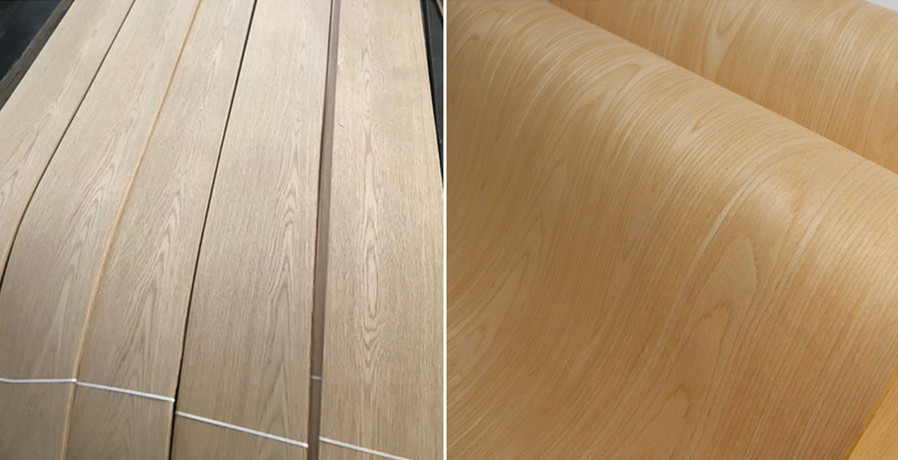
2.1 Natural American white oak wood veneer
Regarding the wood veneer thickness, there are approximately four different types of natural American white oak veneer.
2.1.1 0.25mm thin fleece/paper backed white oak veneer
Backed white oak veneer is made by bonding genuine white oak veneer to a flexible backing, such as fleece or kraft paper.
This enhances flexibility, durability, and resistance to splitting, making it easy to handle and apply.
It is a cost-effective alternative to standard 0.5 mm veneers, offering a high-quality appearance at a lower cost.
Available in 0.22–0.25 mm thicknesses, both fleece- and paper-backed options are ideal for furniture, cabinetry, wall panels, and veneered boards.
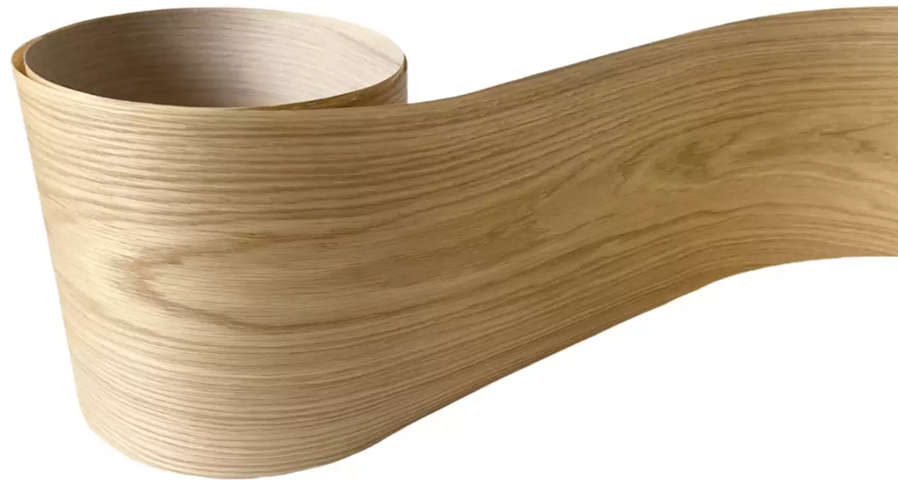
2.1.2 0.4mm & 0.5mm common American white oak veneer
In China, 0.4 mm white oak veneer is the standard stock thickness and remains the most popular choice in the domestic veneer market.
Some veneer slicing factories also produce 0.5 mm white oak veneers specifically for export orders.
They offer the natural beauty of white oak while being lightweight and cost-effective, providing flexibility at an affordable price.
2.1.3 1mm, 2mm, 3mm, and 5mm thick white oak veneer
When producing high-end white oak cabinets, furniture, or bespoke woodwork, many craftsmen prefer thick white oak veneers for their fine texture, natural depth, and excellent workability.
To meet this demand, we supply 1 mm and 2 mm American white oak veneers, available in random lengths over 2500 mm and widths above 100 mm.
3 mm white oak veneer sheets are perfect for luxury cabinet doors, furniture surfaces, and other premium joinery projects, showcasing a rich, natural wood grain.
5 mm thick white oak veneers can be laminated onto plywood or MDF to create decorative wall panels or milled features, adding depth and elegance to interior spaces.
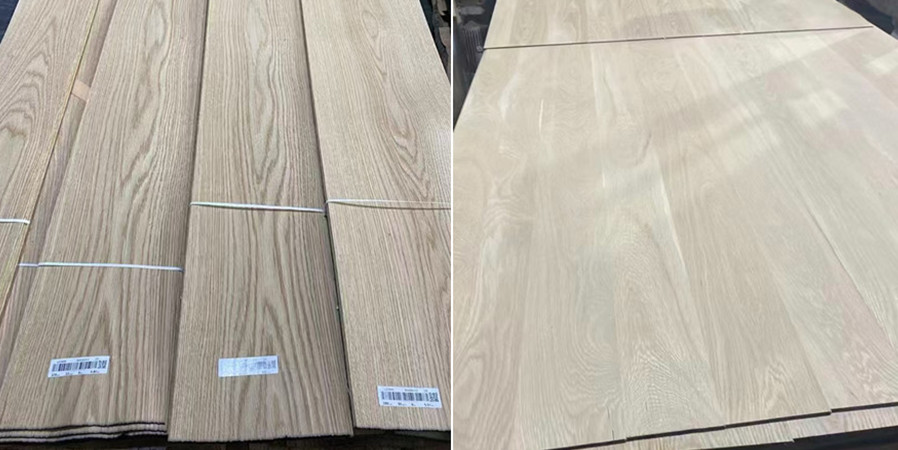
Regarding the wood veneer grain and color, there are approximately 7 different types of natural American white oak veneer.
2.1.4 Crown cut (flat cut) American white oak veneer
White oak plain sliced is a veneer cut method where the log is flat-cut through the growth rings, resulting in a cathedral or flame-like grain pattern.
2.1.5 Rift cut (quarter cut) white oak wood veneer
White oak rift cut veneer—also called rift sawn white oak veneer, rift cut white oak veneer, or sometimes quarter sawn oak veneer—is produced by quartering the log and slicing each section vertically, perpendicular to the growth rings.
Also known as straight cut or quarter cut, this rift white oak veneer method yields a distinctive, straight, fine grain with a uniform and elegant appearance, ideal for high-end furniture, cabinetry, and interior applications.

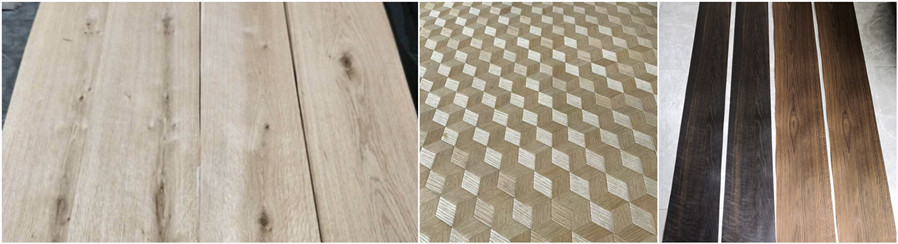
2.1.6 Rustic (knotty) white oak veneer
Rustic white oak veneer, also known as knotty oak veneer, features natural knots, grain variation, and color contrast.
It offers a warm, aged look that brings an organic touch to furniture and interiors.
Its durability and charm make it popular in both classic and modern designs.
2.1.7 Rough-sawn cut American white oak veneer
Rough-sawn American white oak veneer mimics the look of raw, saw-cut wood with a textured, uneven surface, adding depth and a natural, rustic feel to any project.
2.1.8 Woven white oak veneer
Woven white oak veneer is made from interlaced strips, creating a textured, stylish look. It adds depth and is ideal for luxury furniture, cabinetry, and modern decor.
2.1.9 Cross-cut end-grain white oak veneer
Cross-cut end-grain white oak veneer showcases bold, circular patterns from the log, offering a dynamic, textured look.
2.1.10 Smoked white oak wood veneer
Smoked white oak veneer, also known as fumed white oak veneer, is treated through a smoking process to achieve a darker, richer color and deeper grain patterns.
This process gives the wood a warm, amber to dark brown tone with an aged, vintage look.
2.1.11 Dyed or bleached white oak wood veneer
Dyed white oak veneer is color-treated while keeping its natural grain.
Available in various colors, it’s ideal for furniture, cabinetry, and design projects needing custom aesthetics.
Washed white oak veneer is lightly bleached or distressed for a soft, weathered look, highlighting the natural grain with a rustic, muted finish.
Regarding the jointed or spliced wood veneers, there are approximately 2 different types of natural American white oak veneer.
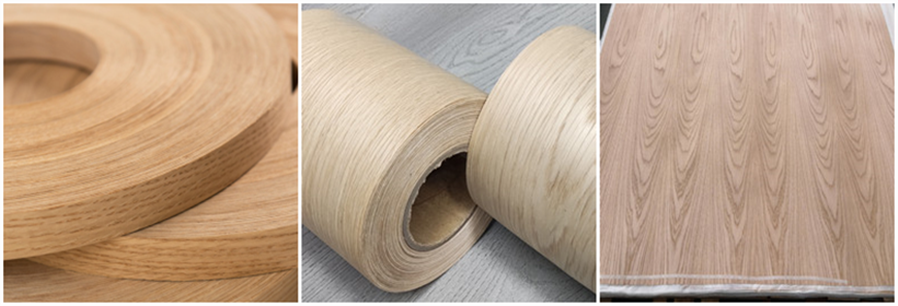
2.1.12 Finger joint white oak veneer rolls for edgebanding and profile wrapping
Finger-jointed white oak veneer rolls are durable sheets rolled for easy handling and storage, ideal for seamless edge banding and profile wrapping.
The main difference is that edge banding is for flat surfaces, typically 15-60mm wide, while profile wrapping covers both flat and curved surfaces, usually 60-300mm wide.
Standard thicknesses range from 0.25 mm to 0.8 mm, with all veneers supported by fleece or paper backing for improved flexibility and durability.
After joining, the rolls are precision-slit to custom widths, providing seamless coverage on MDF, plywood, and chipboard for easy application on doors, furniture, skirting boards, and moulding profiles.
2.1.13 Spliced white oak veneer sheets
Spliced white oak veneer is an edge-jointed sheet made by joining individual white oak veneer leaves through edge gluing or thread splicing.
By carefully matching these leaves, you can achieve book match, slip match, or random match patterns.
For creative woodworking, decorative options like diamond, herringbone, or sunburst matches are also possible.
These matched white oak veneers are commonly used for custom doors, wall panels, and furniture, offering tailored sheets in various sizes and patterns.
Spliced white oak veneer is prized for its light, natural tone, fine grain, and design versatility, making it ideal for modern furniture and architectural applications that require both craftsmanship and aesthetic appeal.
2.2 Reconstituted white oak veneer
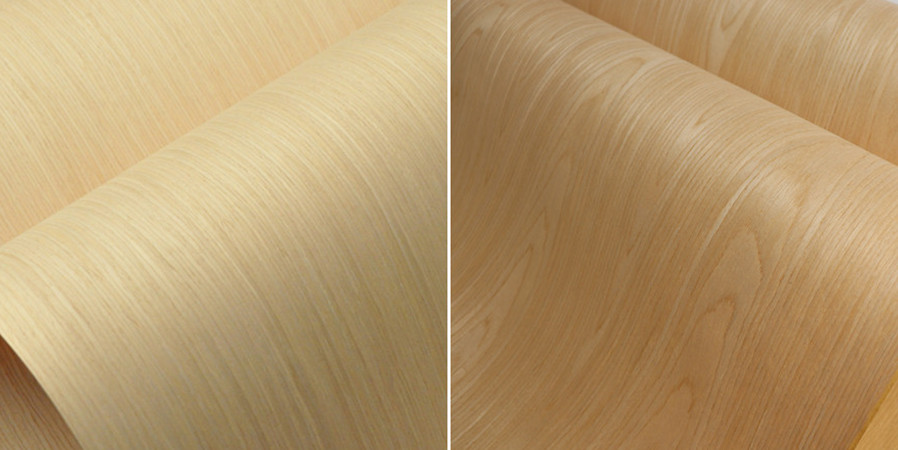
Reconstituted white oak veneer, also known as engineered or composite white oak veneer, is made through a multi-step process involving soaking, peeling, bleaching, dyeing, drying, and pressing.
It uses raw materials like Poplar, Ayous, or Basswood, with quality impacting the veneer’s density.
Its key advantage is the uniform color and grain, ensuring a consistent, high-quality appearance across every sheet—perfect for large-scale or precision design projects.
Standard sheet sizes are 2500 × 640 mm, with custom lengths and widths available to meet specific design requirements.
Our standard stock thicknesses are 0.2 mm and 0.4 mm, with custom thicknesses up to 5 mm available for specialized applications.
3. Advantages of using American white oak veneer
3.1 Natural aesthetic appeal
American White Oak veneer showcases a beautiful grain pattern with warm, natural tones, making it ideal for high-end furniture, cabinetry, and interior décor.
3.2 Cost-effective
Compared to solid white oak, veneer allows for a luxurious appearance while using less raw material, making it a more economical choice.
3.3 Sustainability
Veneer production maximizes wood utilization, reducing waste and promoting eco-friendly manufacturing compared to solid wood.
3.4 Stability
White oak veneer is more stable than solid wood, making it ideal for doors, panels, and furniture exposed to changing environmental conditions.
3.5 Versatility in applications
Versatile for furniture, wall panels, cabinetry, and millwork due to its adaptability to various substrates.
4. Application of American white oak wood veneer
American White Oak Veneer is commonly bonded to substrates such as plywood and MDF and widely used in furniture manufacturing.
White oak wood veneer is valued for its light, natural tone, straight grain, and clean, modern appearance.
It is a versatile, premium material that brings warmth, durability, and timeless elegance to a wide range of design and manufacturing applications.
Here’s a closer look at how white oak veneer is used across different industries:
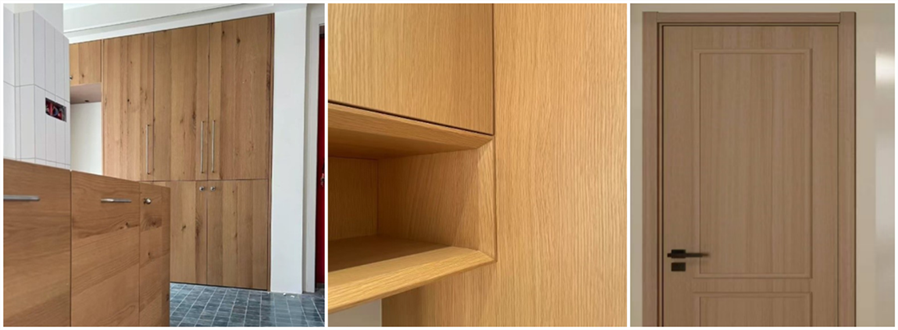
4.1 High-end furniture and door manufacturing
White oak veneer is a premium choice for high-end furniture and interior wood doors, offering a natural, elegant grain and durable surface.
It is widely used in tables, cabinetry, shelving, and doors, providing a seamless, luxurious finish that highlights the beauty of solid wood.
Its versatility and workability make it ideal for bespoke designs, allowing craftsmen to create sophisticated furniture pieces with consistent color, texture, and quality.
4.2 White oak veneered wall panels
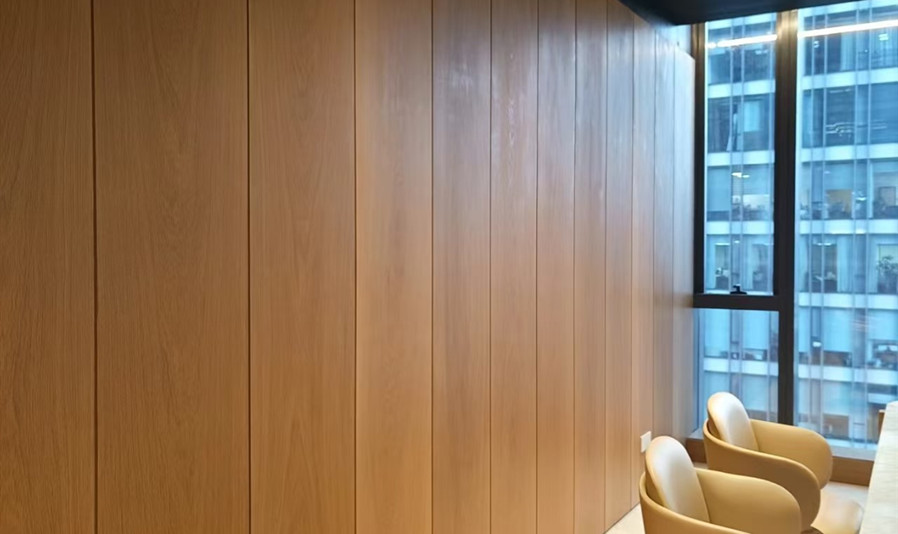
We offer a wide range of white oak panels for walls, including solid white oak panels, fluted white oak panels, milled white oak panels, and flexible tambour white oak wall panels.
From modern fluted designs and vertical slat panels to classic tongue-and-groove wall systems, our white oak panels for walls bring warmth, depth, and natural elegance to any interior space.
For functional performance, acoustic white oak panels help improve sound control, while 3D and tambour panels create bold visual statements.
In addition to natural white oak veneer, we also provide PVC oak grain and reconstituted white oak veneer options to suit different budgets and applications.
For customized white oak wall panels in specific sizes, profiles, or finishes, our sales team is ready to provide professional support and tailored solutions.
5. Comprehensive problems in applying white oak veneer and solutions
5.1 Warping and Bubbling
Solution:
✅ Ensure proper acclimation of the veneer by storing it in the same environment where it will be applied for at least 48 hours.
✅ Use a high-quality contact adhesive or cold press glue applied evenly.
5.2 Cracking
Solution:
✅ Use a flexible backing (such as paper or phenolic) to reinforce the veneer.
✅ Apply veneer with the grain direction aligning with the substrate’s movement to reduce stress.
5.3 Color Variation
Solution:
✅ Use a wood conditioner before applying stain to ensure even absorption.
✅ Always test stain on a sample piece before full application. If color consistency is crucial, opt for dyed or reconstituted veneer, which is more uniform.
Leave A Comment