
If you’re looking for a wood that combines elegance, durability, and timeless beauty, look no further than black walnut.
Known for its rich, dark hues and striking grain patterns, black walnut veneer has become a sought-after choice in high-end furniture, cabinetry, and even flooring.
But what makes this wood so special?
In this blog, you will learn about the unique qualities of black walnut veneer and why it’s a top choice for designers, craftsmen, and homeowners alike.
- 1
- 2
- 3
- 4
- 5
- 6
- 7
1. What is American walnut veneer?
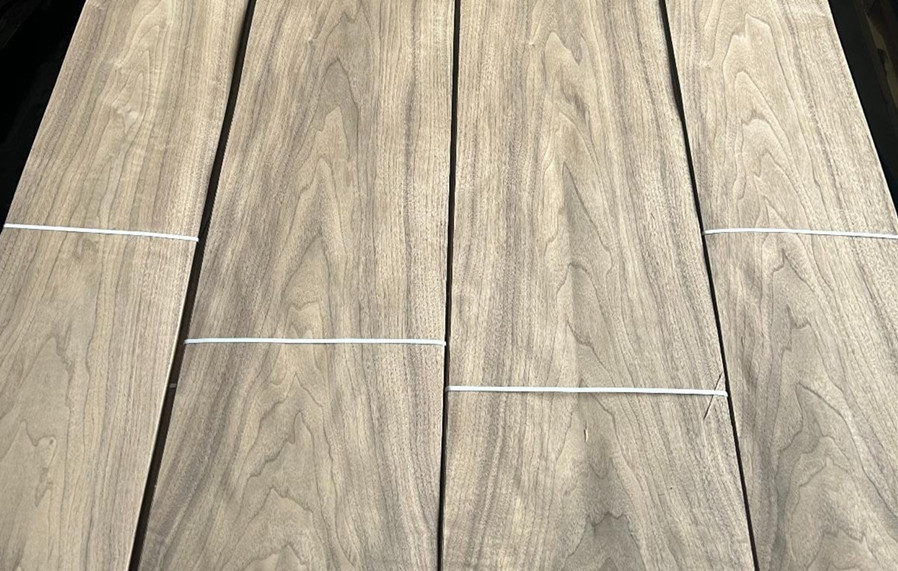
When it comes to elegance, warmth, and sophistication in interior design, black walnut veneer stands in a class of its own.
In different design applications, it is also referred to as walnut veneer, American walnut veneer, or Black walnut veneer—all prized for their deep, rich brown tones and striking grain patterns.
These veneers bring the beauty of solid walnut wood to surfaces more sustainably and cost-effectively.
But what exactly are these walnut veneers?
American walnut veneer is a thin slice of wood derived from the black walnut tree (Juglans nigra), native to North America, with the highest-quality logs coming from regions like Ohio, Indiana, Missouri, and Kentucky.
In terms of performance, black walnut all deliver exceptional aesthetics and durability. With a density of around 640-730 kg/m³ when dried, they provide a solid, sturdy feel.
Whether you’re a designer aiming for a classic yet contemporary look or a craftsman seeking quality materials, these walnut veneers remain timeless choices that blend natural beauty with modern versatility.
2. Types of black walnut veneer
Regarding the walnut veneer thickness, there are approximately two different types of natural American walnut veneer.
2.1 0.2mm, 0.4mm, and 0.5mm thin black walnut veneer
0.2mm to 0.5mm black walnut veneer refers to ultra-thin sheets of natural black walnut wood that are sliced from logs and used for surface decoration in furniture, interiors, and architectural applications.
2.2 1mm, 2mm, 3mm, and 5mm thick walnut veneer
When black walnut veneer reaches thicknesses of 1mm, 2mm, 3mm, or even 5mm, it enters the category of what’s often called thick veneer or lamella, and has different applications and advantages compared to traditional thin veneers (such as 0.2–0.5mm).

Regarding the walnut veneer grain and patterns, there are approximately 8 different types of natural American walnut veneer.
2.3 Flat cut (crown cut) American walnut veneer
Crown cut black walnut veneer, also referred to as flat cut walnut, plain sawn walnut veneer, or plain sliced walnut, is produced by slicing a log through its center.
This method creates the signature cathedral or “crown” grain pattern, highlighting the natural beauty of black walnut with its rich color variations and flowing, dynamic grain.
The plain sawn / plain sliced technique emphasizes broad, natural wave-like patterns, giving each panel a warm, organic character that is both elegant and visually engaging.
This makes it ideal for cabinetry, furniture, wall panels, or interior joinery where a striking yet natural wood surface is desired.
Whether for modern or classic interiors, crown sliced black walnut veneer—also known as flat cut or plain sliced—offers a combination of refined aesthetics, natural warmth, and timeless appeal, making it a versatile choice for high-end wood projects.
2.4 Rift cut (quarter cut) American walnut veneer
Rift-cut American walnut veneer—also known as quarter-cut walnut veneer, quarter-sliced walnut, quartered walnut, quartered walnut veneer, quarter sawn walnut veneer, rift cut walnut veneer, rift sawn walnut veneer, and rift walnut veneer—is prized for its refined, straight-grain beauty and timeless sophistication.
By slicing the log radially, perpendicular to the growth rings, this technique reveals a clean, linear grain pattern that radiates calm and consistency.
The result is a surface that exudes quiet luxury, with rich chocolate-brown tones and subtle grain detail that feels both modern and classic.
Its structure isn’t only beautiful—it’s also naturally stable, making it less prone to warping or distortion.
If you’re looking for a veneer with a rich, dark, and elegant straight-grain appearance for luxury design applications, this cut is an excellent choice.
2.5 Rough-sawn cut black walnut veneer
Rough-sawn cut black walnut veneer is made from black walnut wood that is cut using a rough, saw-like technique instead of being smoothly sliced.
This cutting method creates a textured surface that shows the natural, rustic look of the wood, including saw marks, grain patterns, and an uneven texture.
It’s perfect for projects that want to highlight the wood’s natural beauty and rough texture, giving it a unique, warm, and rugged appearance.
2.6 Cross cut end-grain walnut veneer
Cross-cut (end grain) black walnut veneer is made by cutting across the wood’s grain, exposing the growth rings and fiber ends.
This creates a striking, textured look with warm brown tones and a natural, almost mosaic-like pattern—distinct from typical linear or cathedral-grain veneers.
2.7 Walnut burl veneer
Walnut burl, also known as walnut burl veneer, burr walnut veneer, veneer burr walnut, or walnut burl wood veneer, is a highly decorative and rare material derived from the burl section of a black walnut tree.
A burl is a naturally occurring growth or knot where the grain develops in a chaotic, swirling pattern rather than the typical straight structure.
Walnut burl wood (solid wood) is prized for its density, natural beauty, and suitability for fine furniture, carving, and high-end interior elements.
Walnut burl veneer (thin sliced wood) captures the same dramatic swirls, tight “eyes,” and clustered figure patterns, making it ideal for plywood, cabinetry, wall panels, and decorative surfaces.
English walnut burl is especially valued for its depth, movement, and striking patterns.
Buyers looking for black walnut burl wood, comparing walnut burl prices, or selecting walnut burl veneer plywood appreciate its luxurious appearance and visual impact in furniture, automotive interiors, musical instruments, and high-end architectural projects.
2.8 Black walnut veneer crotch
If you’re looking to add an extraordinary touch to your project, Crotch walnut veneer offers some of the most captivating grain patterns found in the wood world.
The term “crotch” refers to the area where the tree’s main trunk divides into branches, creating highly intricate and symmetrical patterns that resemble a flame-like or feathered effect.
The rich, dark tones of black walnut—paired with the intricate grain of crotch veneer—create a sense of sophistication and elegance that’s hard to match.
This material is perfect for statement pieces such as custom furniture, accent panels, and luxury designs that need a standout, organic beauty.
2.9 Woven walnut veneer
Woven walnut wood veneer is made by weaving thin strips of black walnut wood together to form a textured pattern.
The walnut veneer is cut into narrow strips and then interlaced in designs like a fabric pattern.
This creates a unique, detailed texture that is both attractive and strong.
Woven black walnut veneer combines the classic beauty of walnut with a modern look, making it a great choice for designers, architects, and furniture makers.
2.10 Spliced walnut veneer sheets
Spliced walnut veneer sheets refer to veneer sheets made from walnut, carefully cut and joined (spliced) to create larger, continuous surfaces.
This technique is commonly used when the original walnut veneer sheets—such as walnut wood veneer sheets are not large enough to cover a desired area or when the natural grain pattern needs to be seamlessly extended.
Spliced black walnut veneer sheets provide both aesthetic continuity and practical functionality, making them ideal for large-scale furniture, cabinetry, wall panels, and interior design projects, while still showcasing the rich, natural beauty of walnut.
2.11 Walnut veneer rolls
Walnut veneer rolls are sheets of real black walnut veneer that are jointed into a cylindrical shape for easier handling, storage, and application.
These rolls are typically thin slices of black walnut wood, which showcase the rich color and grain patterns of the wood.
The veneer is usually backed with a stabilizing layer, like paper or fleece, to enhance its flexibility and durability.
They provide seamless coverage on the edge of MDF, plywood, and other wood veneered boards, simplifying transportation and application.
Finger-jointed black walnut veneer is strong, stable, eco-friendly, and durable, with seamless joints perfect for edge banding and profile wrapping.
1. walnut edge banding
Walnut edge banding tape (also called walnut edge tape and walnut veneer edging tape) consists of thin, flexible strips of black walnut veneer designed to cover and finish exposed edges of wood panels like plywood, MDF, or particle board.
These tapes create a seamless, natural wood look for furniture, cabinets, countertops, and shelving.
2. walnut veneer rolls for profile wrapping
Black walnut veneer rolls for moulding profile wrapping are flexible, thin sheets of real black walnut veneer specially manufactured for wrapping around shaped or contoured wood, MDF, or composite profiles.
This application is common in architectural moldings, furniture components, and trim work where natural wood grain and seamless coverage are desired.
The main difference between the two is that edge banding is only used to stick to flat surfaces, and the width is generally 15-60mm, while profile wrapping is used to wrap multiple flat and curved surfaces, and the width is generally 60-300mm.
2.12 Reconstituted walnut veneer
Looking for the warm, elegant look of black walnut without the high cost or environmental impact?
Reconstituted walnut veneer—often referred to as recon walnut, recon walnut veneer, or engineered walnut veneer—is a sustainable alternative made from fast-growing species like poplar and Ayous.
These light-colored woods are dyed and compressed into blocks, then re-sliced to create uniform sheets that replicate natural walnut’s rich tone and clean, consistent grain.
The result is a highly stable, eco-friendly, and cost-effective veneer—perfect for cabinetry, furniture, wall panels, and interior design projects.
Standard sizes include 2500 × 640 × 0.2/0.4mm, with extended lengths of 2800mm and 3100mm also available.
For even longer applications, sheets can be spliced seamlessly.
Thicknesses from 0.2mm to 5mm can be customized.
3. Advantages of using black walnut veneer
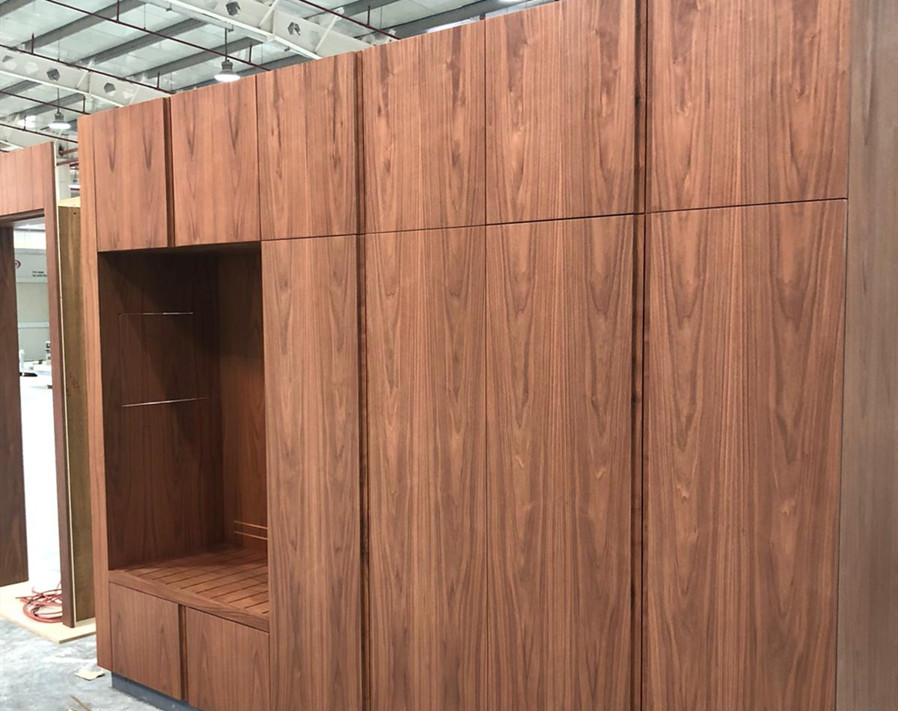
3.1 Aesthetic Appeal
American walnut veneer offers a sleek, modern, and sophisticated appearance, making it ideal for contemporary designs.
3.2 Lightweight
Veneer is thinner and lighter than solid wood, making it easier to handle and install.
3.3 Environmental Benefits
Since veneer uses less wood, it’s a more sustainable option compared to solid wood, reducing deforestation.
3.4 Flexibility in Application
It can be applied to various substrates like plywood or MDF, making it versatile for different types of furniture and interior design projects.
3.5 Durability
Thin black walnut veneer can be quite durable, offering long-lasting performance if properly maintained.
4. Application of black walnut wood veneer
American black walnut veneer is often attached to substrates such as plywood and MDF and then used in furniture making.
Black walnut wood veneer is prized for its deep, warm color tones, elegant grain patterns, and timeless sophistication.
It is a premium material that brings natural beauty and a sense of luxury to a wide range of design and manufacturing applications.
Here’s a deeper look at how it’s used across industries:
4.1 High-end walnut furniture manufacturing
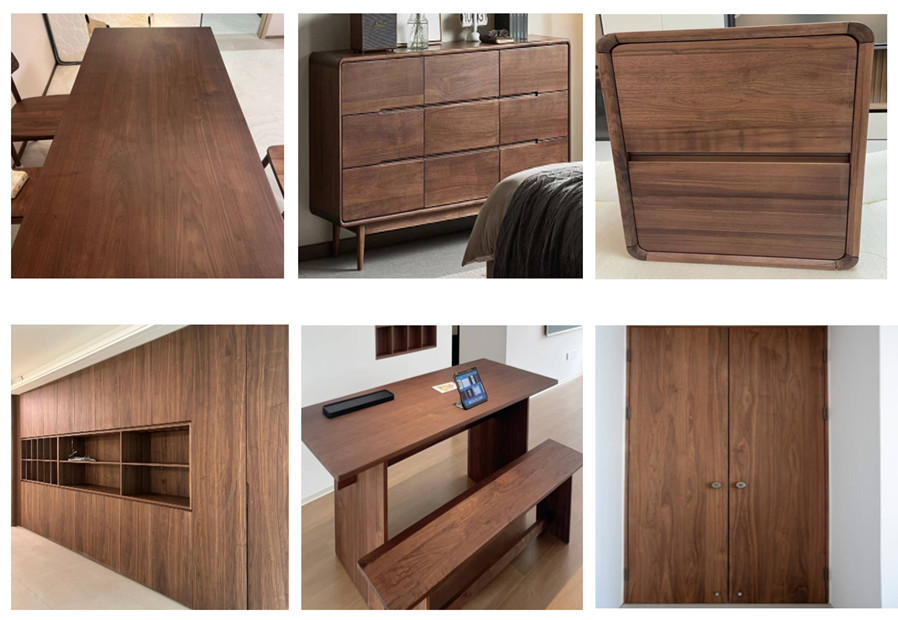
Black walnut veneer is extensively used in the creation of luxury furniture pieces such as dining tables, dressers, headboards, shelving units, office desks, doors, and cabinets.
Its rich chocolate to purplish-brown hues, paired with straight or curly grain patterns, give furniture a refined and upscale feel.
Using veneer also allows for large, consistent surface finishes that would be difficult and costly to achieve with solid walnut.
4.2 Walnut wood veneered panels
Used in wall panels, feature walls, ceiling inlays, and reception counters, black walnut veneer adds warmth and prestige to interior spaces.
It remains a preferred choice in executive offices, hotels, museums, and high-end residences.
Walnut veneer can be applied to MDF or plywood, including unfinished walnut plywood, dark walnut plywood, and prefinished walnut plywood.
Standard sheet formats such as walnut veneer plywood 4x8ft enable efficient production of walnut-faced plywood, offering designers and manufacturers versatile aesthetic and functional solutions.
Buyers often consider the walnut plywood price when selecting walnut veneered plywood for cabinetry, furniture, and other interior applications.
These sheets can be finished in matte, satin, or high-gloss, depending on the design requirements.
5. American black walnut veneer in China
China’s demand for American black walnut veneer remains strong and is supported by clear trade data and market dynamics.
Many Chinese buyers actively search for walnut veneer, American walnut timber veneer, and compare American walnut veneer prices when sourcing materials for high-end manufacturing.
According to the American Hardwood Export Council (AHEC), China consistently ranks as one of the largest importers of American hardwoods, with black walnut being one of the most valuable species per cubic meter.
In 2023, China imported over $90 million worth of American walnut lumber and veneer combined, making it one of the top destinations globally for this high-end wood product.
While exact data for black walnut veneer alone can be harder to isolate, overall hardwood veneer exports from the U.S. to China have shown resilience even amid global economic pressures.
Many buyers also monitor black walnut burl for sale, black walnut burl price, and demand for black walnut burl veneer as figured walnut continues to attract premium markets.
The U.S. International Trade Administration’s Trade Stats Express also confirms that wood veneer is among the significant wood product exports to China.
Chinese manufacturers closely follow black walnut veneer log prices, general black walnut veneer prices, and broader walnut veneer log prices, as high-quality walnut veneer logs remain essential for stable production.
In terms of price trends, American black walnut veneer commands a premium in China due to its rich color, fine grain, and relative scarcity.
Prices have remained high, especially for higher-grade or figured veneers, driven by demand in luxury furniture, interiors, and paneling.
The shift in Chinese consumer preference toward more natural, high-end materials further supports this upward trend.
6. Comprehensive problems in applying black walnut veneer and solutions
6.1 Color variation
Problem: Black walnut veneer often exhibits natural color variation ranging from light brown to dark chocolate. This inconsistency can affect the final appearance, especially in large projects requiring uniform tones.
Solution:
✅ Use veneer sequencing (book-matching or slip-matching) for visual consistency.
✅ Select veneers from the same log or batch.
✅ Apply toning stains or dyes to balance shades without losing the natural look.
6.2 Glue bleed-through
Problem: Due to its porous nature, the adhesive can seep through the veneer, causing dark spots or surface stains.
Solution:
✅ Use glue with proper viscosity and apply evenly.
✅ Consider using fleece- or paper-backed veneers, which act as a barrier.
✅ Pre-test glue on a sample piece.
6.3 Cracking or splitting
Problem: Thin walnut veneer can be fragile during handling or when applied to curved surfaces.
Solution:
✅ Use backed veneer for more flexibility and strength.
✅ Apply veneering techniques like vacuum pressing to minimize stress.
✅ Store veneer properly (away from humidity swings) to prevent pre-application damage.
6.4 Veneer bubbling or delamination
Problem: Poor adhesion due to incorrect glue or uneven pressure leads to bubbles or peeling over time.
Solution:
✅ Apply uniform pressure using vacuum or cold press techniques.
✅ Ensure substrates are clean, dry, and free of dust/oils.
✅ Choose appropriate glue for the application (e.g., PVA for interior work, urea resin for high-temp use).
7. Black walnut veneer buying guide
7.1 Confirm the walnut veneer type
Black walnut veneer comes in various cuts and grains, each with its own grain appearance and use case:
Plain Sliced (Flat Cut): Shows cathedral or flame-like patterns; popular for decorative panels.
Rift/Quarter Cut: Straight, linear grain; ideal for minimalist or modern designs.
Choose the cut based on your design intent—natural elegance vs. statement texture.
7.2 Choose the right thickness
0.2–0.25mm: Super thin, good for curved surfaces and profile wrapping.
0.4–0.5mm: Standard thickness for furniture, veneered panel, and door manufacturing.
1mm–2mm: Standard thick walnut veneer for paneling and surface lamination.
3mm–5mm: Used for high-end cabinetry or where durability is needed.
Thicker veneers resist damage better but cost more and require stronger adhesives.
7.3 Inspect Quality Parameters
Key elements to evaluate:
Color Consistency: Natural variation is normal, but extreme differences may indicate poor grading.
Grain Clarity: Look for clean, well-defined grain.
Defects: Avoid knots, cracks, or excessive mineral streaks unless you’re aiming for a rustic look.
Moisture Content: Veneers should be kiln-dried and stable.
7.4 Backings & formats
Black walnut veneers are available in different formats:
Raw veneer: Needs careful handling.
Paper-backed or fleece-backed: For flexibility and easier application.
Spliced sheets: Seamlessly joined for large panels.
Leave A Comment